Natural Sunlight Vs. Artificial Lighting for Reptiles
In this article I will talk about the LUX and UV readings at coordinates 34.6022 N, 112.3219 W is the lat/long coordinates for Prescott Valley, AZ. Elevation is 5,015’, for simplicity I will be using 5000’. At the equator LUX readings can reach as much as 50,000K on a sunny day and 10,000K on a cloudy day. Being at 35 N latitude, I figure substantial differences will be seen compared to the Equator. I will be documenting readings at my location on natural sunlight LUX measurements using a Digital Illuminance Meter LX 1330B 200000 LUX meter. The second reading I will be documenting is UVB measurements utilizing the Solar Meter 6.2. I will conduct the same measurements on my turtles lighting setup. All measurements under the MVB will be taking directly under the light/heat source. The LUX reading in the tank room is the ambient light in the room the tank is located.
Purpose: Document the light spectrum differences from my turtles lighting setup and natural sunlight found outdoors. This will give others and me a good idea of the short comings that we could be providing our reptiles.
Tank Setup: 40g breeder tank. One ZooMed 100w PowerSun Mercury Vapor Bulb (MVB), bottom of bulb is 14” from the basking branch surface. Turtle shell height 2”. This gives an approximate measurement of 12” from the top of the shell to the bottom of the MVB.
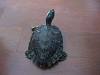
Tank Habitant: 1 Rio Grande Red Ear Slider.
Conditions will be explained prior to every reading document at the time of the measurement. I plan for several different environment conditions threw out the four seasons.
02 Dec 2012 1430 local time
Weather condition: Thin high level cloud layer. Temp 67 degrees Fahrenheit, 37% humidity.
UVB Reading: 76 uW/cm2
Concrete Surface Temp: 77.2 degrees Fahrenheit
LUX: 50,500
Turtle Tank
UVB READING: 37 uW/cm2 @ 9”
Basking Surface Temp (driftwood): 97.3 degrees Fahrenheit @ 12.5”
Ambient Temp: 77 degrees Fahrenheit
LUX: 7,700 @ 12”
LUX Reading in tank room: 10,000
The big thing I noticed immediately was the lux reading falls off very rapidly when moving away from the Mercury Vapor Bulb. Due to this the ambient light for the tank is considerably lower than the basking zone. This is evident in the difference of the ambient light and the basking light readings. I will be conducting new measurements twice a month for a one year period. This should give a good indication of the changings of the season and provide varied weather conditions. Next measurement mid-December.