Posted: Sun Nov 23, 2008 11:36 pm
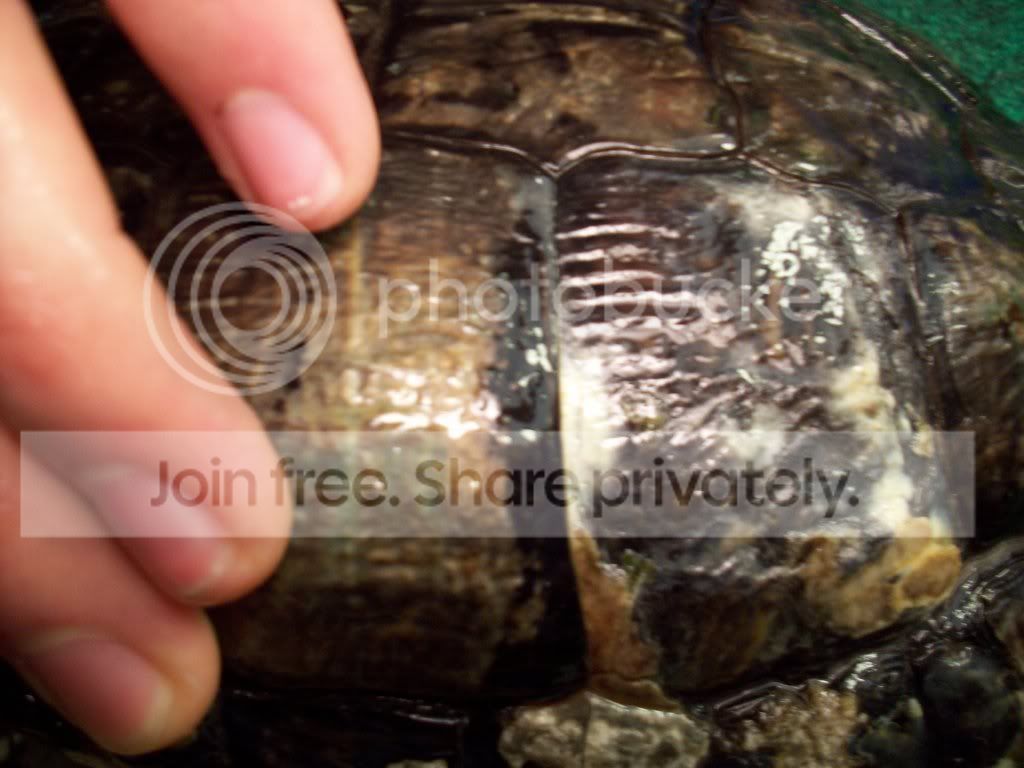
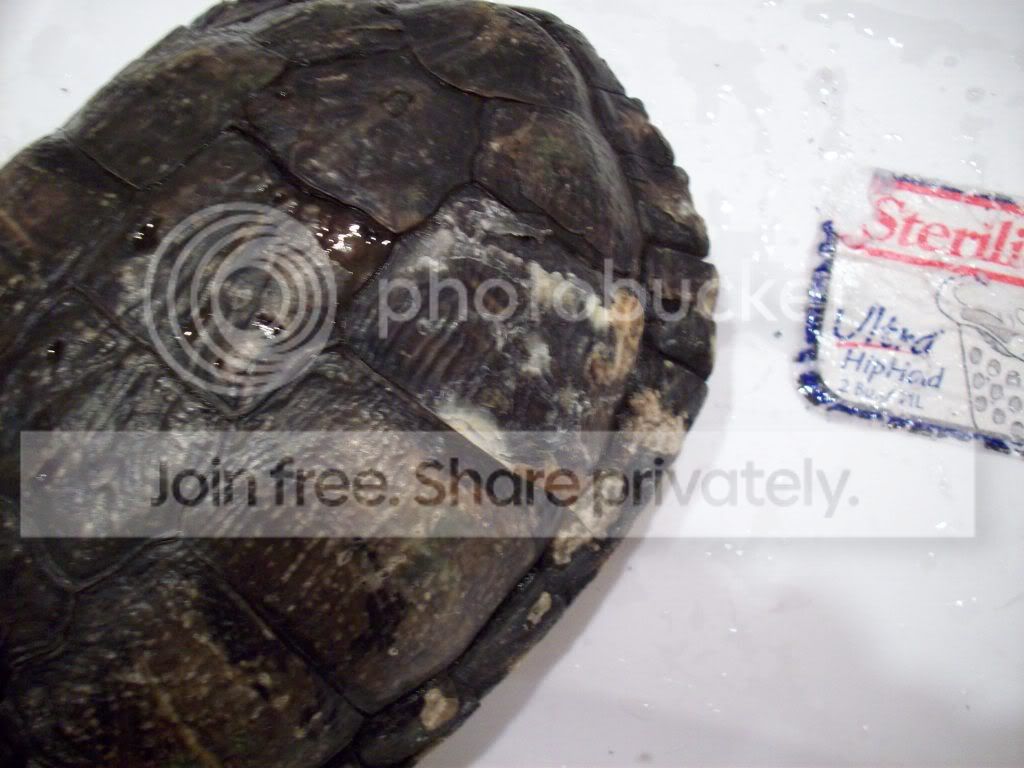
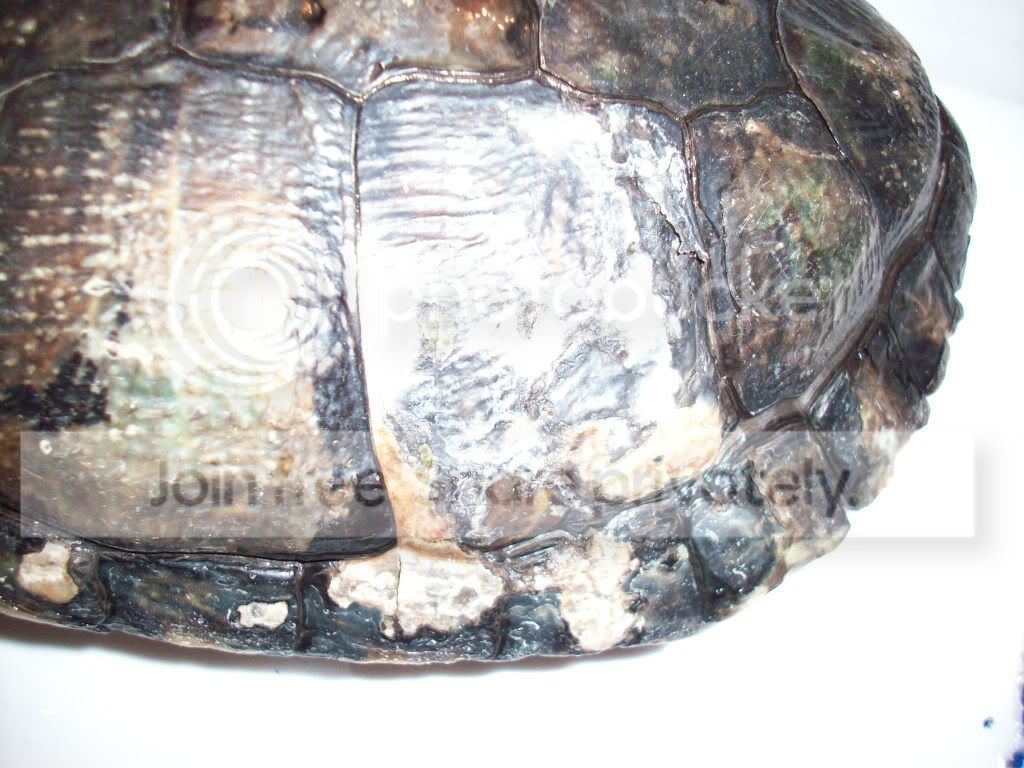
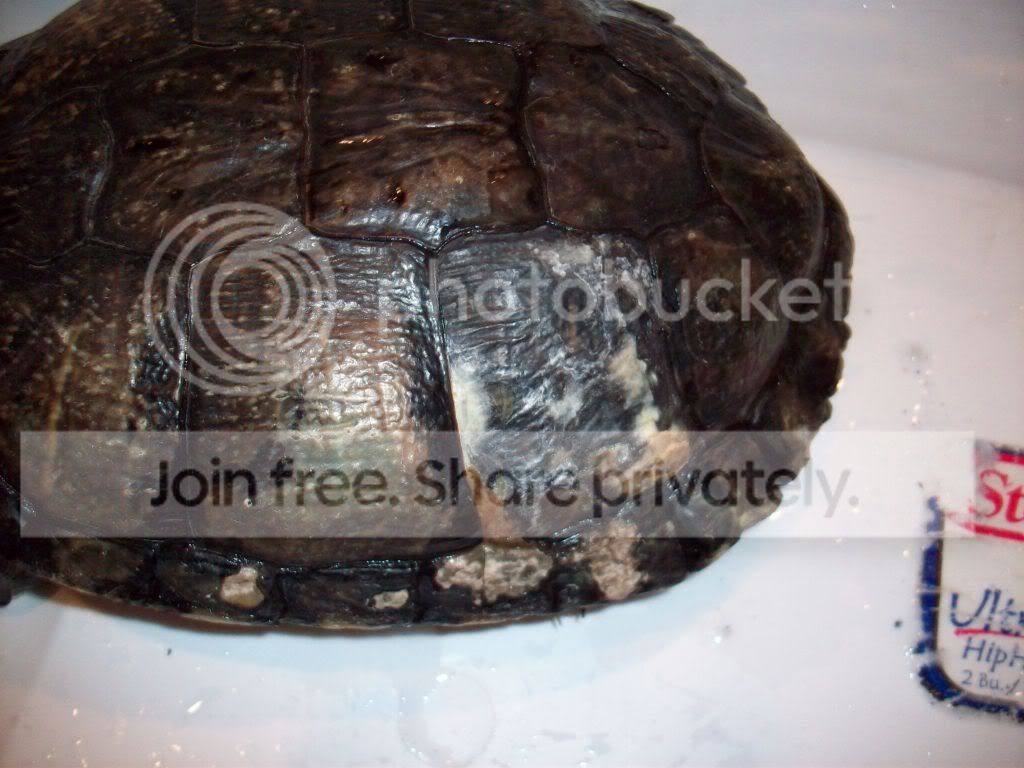
I agree with Meg that it looks fungusy, may be bacteria involved as well. It also looks like he's having difficulty shedding old scutes (the top layer of shell is supposed to shed off from time to time). Water gets trapped under the old scutes and makes a good home for fungus and bacteria.
what does the plastron look like?
See if you can get some SSD cream (silver sulfadiazine) from the vet. Also get some Hibiclense (over the counter at places like Walgreens). Hibiclense is a hand wash for people that contains a very good antiseptic. You'll need at least daily washes (and rinses) with Hibiclens followed by applications of the cream on the infected areas and lots of dry docking. One way to do this would be to do the wash and cream at night, then dry dock him overnight in a safe, warm place with towels to make it soft.
If I were you, I'd have a good herp vet take a look at the shell. A vet may want to give antibiotics. I just don't know. I tend to be conservative where turtle health is concerned but I'd take mine in with a shell like that.
To encourage those old scutes to come off, add foods containing vitamin e to his diet. Here's a list:
Tomato
Sweet potato
Turnip greens
Blueberries
Apple skin
Most turtles especially love blueberries and steamed sweet potato.
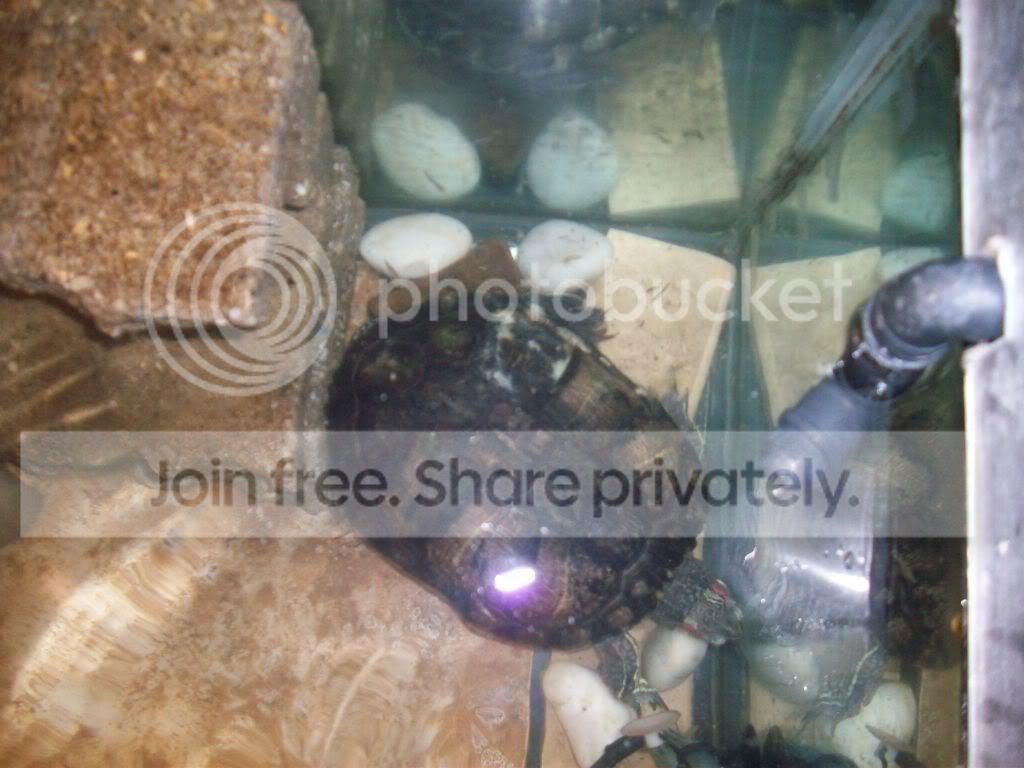
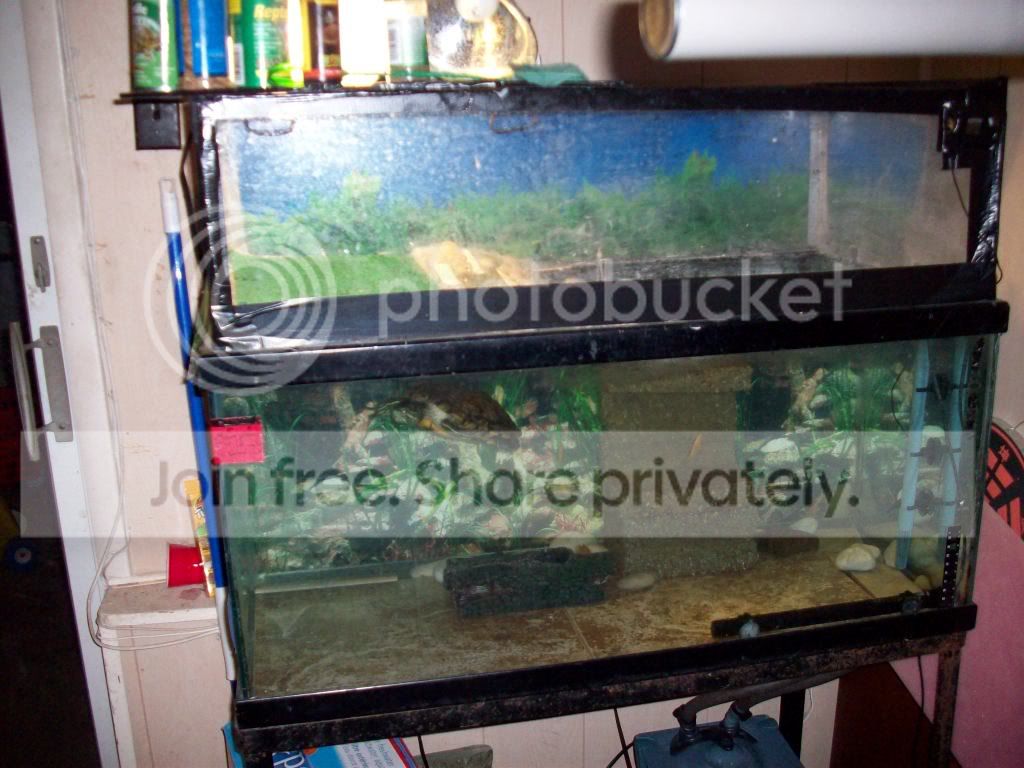
Things to check to determine why the fungus: (1) Shells must dry out comletely - top and bottom. Does he bask much? Does the green carpeting in the ATBA stay dry or does it get wet and stay that way? (2) Turtles have to bask under good UVB light. What brand and strength of bulb do you use? When was it last changed? (3) Water must be clean. If you're using a good Rena filter and maintaining it properly, water quality is probably ok, but have you tested water for ammonia and nitrites?
Just so you know, my turtle at one time had a really bad shell condition, more dramatic looking that yours. Whatever a turtle keeper can do wrong - I was doing it. It's a miracle he lived. But after being treated as described above and having his habitat and diet corrected, he shed off all the damaged shell and looks great today. So stick with it!
By the way, if you wind up at a vet's, don't let the vet give your turtle a shot of vitamin a without giving you a really good reason for it. If there is a vitamin a deficiency it can usually be corrected with cod liver oil and diet upgrades. The shots are tricky and many turtles on here have had very bad reactions to them, including death. Some vets seem to give the shots as a matter of routine, which is why I mention it to you.
SpotsMama